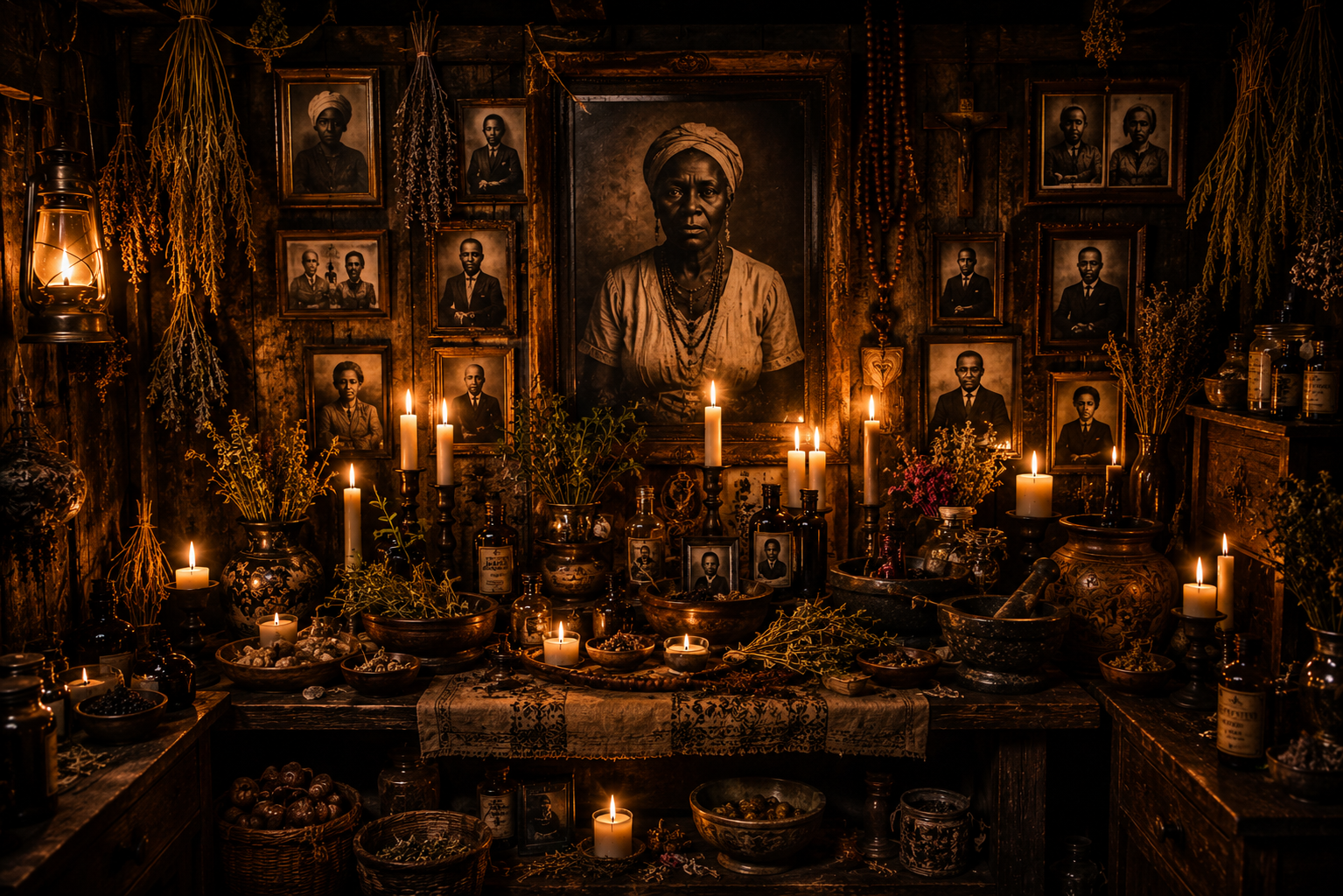
Auxiliary and Protective Spirits: Understanding the Helpers That Walk Beside Us
Before the article, one note: Many traditions understand the spiritual world differently. Terms like Auxiliary Spirits and Protective Spirits can have different meanings depending on lineage, culture, and spiritual practice. This article reflects a broad ancestral and spiritist perspective and encourages readers to seek guidance within their own tradition.
When people begin exploring spirituality, one of the first questions they ask is:
“Who is actually walking with me?”
Many people immediately think of ancestors or spirit guides, but the spiritual world is far more diverse than many realize. Throughout countless traditions—from African Traditional Religions and Spiritism to Indigenous practices and folk spiritual traditions—there exists the understanding that we rarely walk alone.
Among the many spiritual intelligences that may accompany a person are what are commonly referred to as auxiliary spirits and protective spirits. While these terms are sometimes used interchangeably, they often describe different roles within one’s spiritual court.
Understanding these distinctions can deepen your spiritual awareness while helping you approach your practice with greater humility, discernment, and respect.
What Are Auxiliary Spirits?
Auxiliary spirits are often understood as spirits whose purpose is to assist your spiritual development and life’s work.
Unlike direct blood ancestors, auxiliary spirits may not share your family lineage. Instead, they are believed to accompany individuals because their experiences, wisdom, or spiritual strengths complement the path that person is walking.
Some traditions believe these spirits may have served humanity during their earthly lives through healing, teaching, protection, justice, herbal medicine, prayer, or acts of compassion. Others see them as experienced spirits who volunteer to assist souls during different stages of life.
Their role is generally one of support rather than control.
They may help strengthen:
- Spiritual discernment
- Personal growth
- Emotional resilience
- Prayer and meditation
- Learning spiritual discipline
- Understanding life’s lessons
- Service to others
An auxiliary spirit is not believed to live your life for you. Rather, many traditions view these spirits as companions who encourage wisdom, patience, and responsible decision-making.
What Are Protective Spirits?
Protective spirits are understood in many traditions as spirits whose primary responsibility is safeguarding an individual from spiritual, emotional, or energetic harm.
Protection is not always dramatic.
Many people expect protection to look like miraculous interventions, but often protection may appear as:
- Delays that prevent greater problems.
- Intuitive feelings telling you not to go somewhere.
- Dreams that encourage caution.
- Unexpected opportunities that redirect your path.
- A deep sense that something simply doesn’t feel right.
Many traditions teach that protective spirits work quietly, constantly encouraging awareness rather than removing every hardship.
Protection does not necessarily mean a life without challenges.
Instead, it may involve guidance through those challenges with greater wisdom.
Are Protective Spirits Always Ancestors?
Not necessarily.
Depending on the spiritual tradition, protective spirits may include:
• Blood ancestors who continue caring for their descendants.
• Spiritual mentors who choose to assist certain individuals.
• Elevated spirits devoted to protection and guidance.
• Members of one’s spiritual court who have accepted protective responsibilities.
Every lineage understands these relationships differently, which is why respectful spiritual instruction is so important.
Your Spiritual Court Is Diverse
Many Spiritist traditions describe the spiritual court as containing different kinds of spirits who each contribute unique strengths.
Some may specialize in healing.
Others may encourage justice.
Some may strengthen faith.
Others may help with communication, wisdom, endurance, or emotional healing.
No single spirit is expected to perform every task.
Just as every family member contributes differently within a household, many traditions understand the spiritual court to function through cooperation rather than hierarchy alone.
Protection Does Not Remove Personal Responsibility
One of the greatest misconceptions in spirituality is believing that having protective spirits means nothing bad can ever happen.
Most authentic traditions teach the opposite.
Spiritual protection works alongside personal responsibility.
That includes:
- Maintaining good character.
- Living with integrity.
- Caring for your physical and emotional health.
- Practicing regular prayer or spiritual discipline.
- Respecting your ancestors and traditions.
- Making wise decisions.
Spiritual support is often viewed as complementing our own efforts—not replacing them.
Learning Discernment
Not every spiritual experience should automatically be accepted as guidance.
Healthy discernment asks important questions:
Does this inspire wisdom rather than fear?
Does it encourage compassion rather than arrogance?
Does it promote healing instead of division?
Does it respect free will?
Authentic spiritual guidance is generally understood to foster humility, clarity, responsibility, and growth rather than dependency or control.
Honoring the Spirits with Respect
Across many traditions, the relationship with protective and auxiliary spirits is built on respect rather than fear.
People may choose to honor them through:
- Prayer
- Quiet reflection
- Maintaining ancestral spaces
- Acts of kindness
- Living with integrity
- Remembering those who came before them
- Serving their communities
The goal is not to command the spiritual world but to cultivate a respectful relationship grounded in gratitude and discernment.
Final Thoughts
Whether you are just beginning your spiritual journey or have walked this path for many years, understanding the roles of auxiliary and protective spirits reminds us that spirituality is rarely about power.
It is about relationship.
It is about responsibility.
It is about honoring those who guide us while remaining grounded in wisdom, humility, and respect.
At The Ancestors’ Room, we believe spiritual growth begins with listening, learning, and walking your path with reverence. Every tradition has its own language, teachings, and ways of understanding the unseen. As you continue your journey, seek knowledge from trusted elders, honor your lineage, and allow discernment—not fear—to guide your steps.